Social Media Calendar: Organize, Plan, and Schedule Smarter
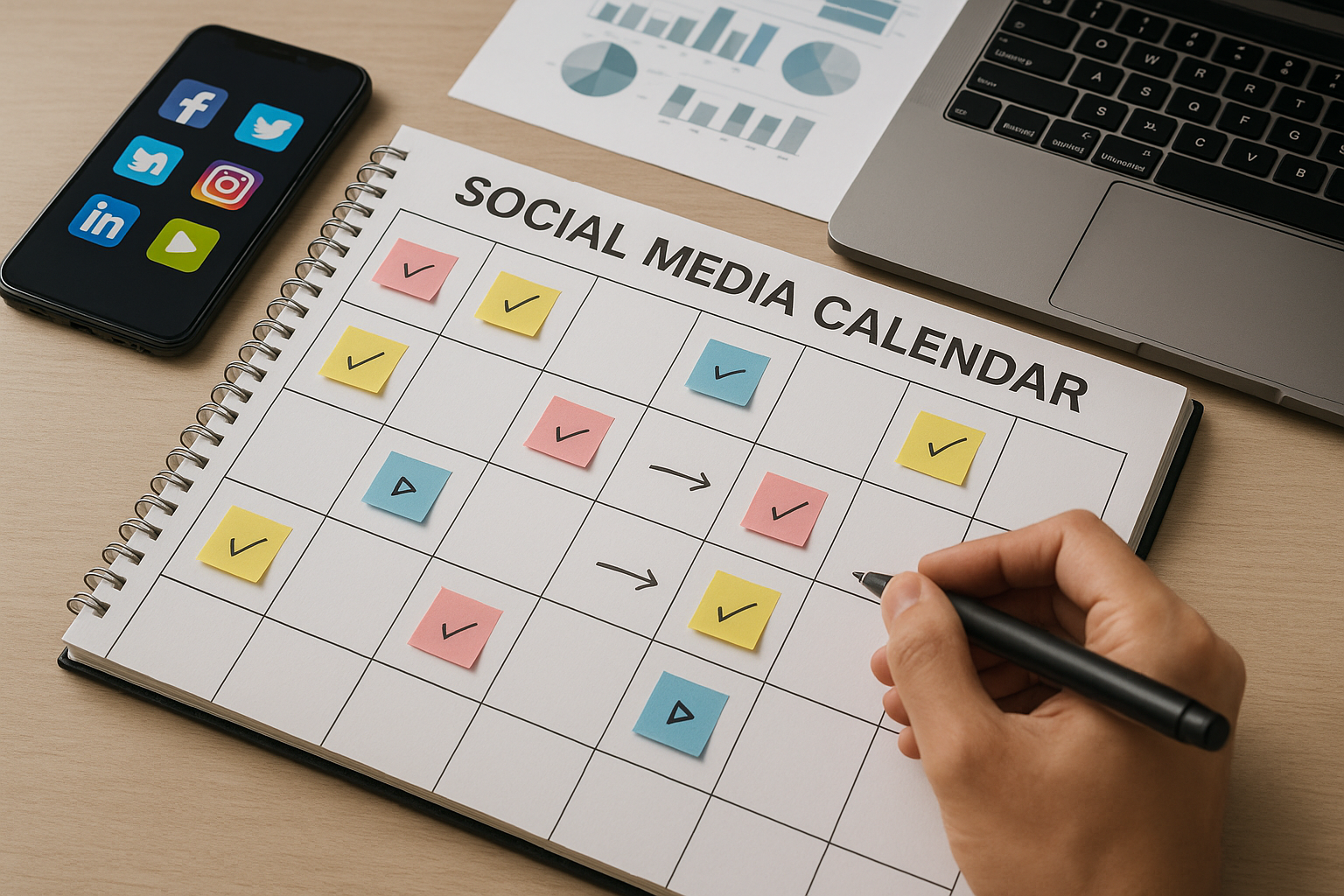
Managing multiple social media accounts without a plan is like trying to cook five meals at once without a recipe. You're bound to miss something important, post at the wrong time, or completely forget about that campaign you meant to launch last week.
A social media calendar isn't just a nice-to-have tool anymore—it's essential for anyone serious about building their online presence. Whether you're a solo entrepreneur, a marketing team, or managing client accounts, having a structured content planner transforms chaotic posting into strategic communication.
What Is a Social Media Calendar?
A social media content planner is your command center for organizing, planning, and scheduling posts across all your platforms. Think of it as your editorial roadmap—showing what you're posting, when it goes live, and which platform it's heading to.
Instead of scrambling each morning wondering "what should I post today?", you have everything mapped out in advance. Your content calendar includes:
- Publishing dates and optimal posting times - Strategic scheduling that ensures your content reaches audiences when they're most active and engaged, maximizing visibility and interaction potential across different time zones and platform algorithms
- Platform-specific content - Tailored messaging that respects each platform's unique culture, with LinkedIn posts maintaining professional tone, Instagram stories using visual storytelling, and Twitter threads offering concise insights that drive conversations
- Post copy and captions - Pre-written, refined messaging that maintains brand voice consistency, incorporates relevant keywords for discoverability, and includes compelling calls-to-action that drive meaningful engagement and conversions
- Visual assets - Organized library of images, videos, graphics, and branded templates that ensure consistent visual identity across all platforms while maintaining professional quality and platform-specific formatting requirements
- Hashtags and keywords - Strategic selection of trending and evergreen hashtags that increase content discoverability, paired with SEO-optimized keywords that improve search visibility and attract target audience segments
- Content categories or campaigns - Clear organization by themes, product launches, seasonal initiatives, or marketing campaigns that ensures balanced content mix and alignment with broader business objectives and promotional strategies
- Approval status and draft post versions - Collaborative workflow features that track content through ideation, creation, review, and approval stages, maintaining quality control and ensuring stakeholder alignment before publication
The beauty of a content calendar lies in its simplicity. You're not just scheduling posts—you're building a cohesive content strategy that aligns with your business goals.
Why Your Content Strategy Needs a Social Media Posting Schedule
Let's address the elephant in the room: why can't you just post whenever inspiration strikes?
Because consistency beats spontaneity every single time.
The Real Benefits of Planning Ahead
Save hours every week. Content creation is time-intensive. When you batch-create posts and schedule post in advance, you eliminate the daily stress of coming up with fresh ideas. One focused planning session can cover an entire week or month, freeing your time for revenue-generating activities and strategic business development.
Never miss important dates. Product launches, seasonal campaigns, industry events—they're all easier to coordinate when you see them coming weeks in advance. Your calendar ensures nothing falls through the cracks, from Black Friday promotions to industry conference tie-ins and customer appreciation milestones.
Maintain brand consistency. Random posting creates a fragmented brand voice. A structured social media posting schedule ensures your messaging stays cohesive across all platforms, reinforcing brand identity and building recognition that translates into customer trust and loyalty.
Improve content quality. Rushed content rarely performs well. Planning ahead gives you time to refine copy, perfect visuals, and ensure each post serves a purpose. You can conduct A/B testing, gather team feedback, and optimize every element before publication.
Track what actually works. When your content is organized, patterns emerge. You'll spot which post types drive engagement, what times work best, and where your audience is most active. This data-driven approach replaces guesswork with strategic decision-making based on measurable results.
Strategic Content Planning: Key Considerations
Finding Content Ideas That Actually Resonate
The hardest part of content creation? Coming up with ideas that your audience cares about.
Start by identifying trending topics in your niche. What questions do people ask? What problems are they trying to solve? Your content should provide value, entertainment, or education—ideally all three.
Modern tools can accelerate this process significantly. Instead of manually researching trends across platforms, you can identify hot topics with AI-powered insights. Some platforms analyze trending content and show you exactly what's working in your industry right now.
Pro tip: Keep a running list of content themes. Mix educational posts with behind-the-scenes content, user testimonials, and product highlights. Variety keeps your feed interesting and caters to different audience segments with varying content preferences.
Choosing Your Publishing Frequency
How often should you post? The answer depends on your resources and audience behavior.
Here's what current data suggests for optimal posting frequency:
- Instagram: 3-5 feed posts weekly, plus 5-7 reels and daily stories for maximum algorithm favor and audience retention
- LinkedIn: 3-5 posts per week for maximum reach without overwhelming professional audiences who value quality over quantity
- Facebook: 3-5 posts weekly (quality over quantity) as algorithm changes prioritize meaningful interactions over posting frequency
- Twitter/X: 10-20 tweets weekly to stay visible in fast-moving feeds where content lifespan is measured in minutes
- TikTok: 5-7 videos weekly for algorithm favor and maintaining presence in "For You" page recommendations
Don't spread yourself too thin. It's better to post consistently on two platforms than sporadically on five.
Selecting Your Primary Platforms
You don't need to be everywhere—you need to be where your audience hangs out.
Ask yourself:
- Where does my target audience spend time? Research demographic data and user behavior patterns to identify platforms where your ideal customers are most active and receptive
- Which platforms align with my content strengths? Visual brands thrive on Instagram and Pinterest, thought leaders dominate LinkedIn, while video creators find success on TikTok and YouTube
- Can I realistically maintain quality content on this platform? Consider resource requirements, learning curves, and time commitments before committing to new channels
If you're B2B, LinkedIn might be your goldmine. Visual brand? Instagram and Pinterest make sense. Younger demographic? TikTok demands attention.
Start with 1-2 platforms, master them, then expand strategically.
Creating and Organizing Your Content
This is where your content planner comes to life.
Dedicate time each week or month to content creation. Write multiple captions, design graphics, record videos—do it all in batches. This focused approach is far more efficient than daily content creation and produces higher quality results.
As you create, organize everything in your calendar. Each piece of content should have:
- Clear scheduling date and time - Precise publication timing optimized for audience activity patterns and platform algorithm preferences
- Platform designation - Specific channel assignment with platform-appropriate formatting and sizing specifications
- Associated campaign or content category - Clear thematic alignment that ensures balanced content mix and strategic objective tracking
- Approval status - Workflow tracking for team collaboration, stakeholder review, and quality assurance before publication
Many creators maintain a draft post section where ideas are refined before being scheduled. This staging area prevents half-baked content from going live and allows for collaborative improvement.
Scheduling Post for Maximum Impact
Timing matters. Your brilliant content won't perform well if posted when your audience is asleep.
Use your analytics to identify when your followers are most active. Test different posting times and track results. You'll discover patterns—maybe your LinkedIn audience engages more on Tuesday mornings, while Instagram thrives on weekday evenings.
Once you know your optimal windows, schedule post in advance during those high-engagement periods. This ensures consistency even when you're busy, traveling, or focusing on other business priorities.
Essential Features of Modern Social Media Calendar Tools
Not all content planning solutions are created equal. The right tool should make your workflow easier, not more complicated.
What to Look For
Multi-platform support. You need seamless scheduling across all your active platforms. Managing separate tools for each channel creates unnecessary complexity, increases costs, and fragments your workflow with disconnected analytics and inconsistent user experiences.
Content idea generation. The best platforms don't just organize content—they help you create it. Look for features that suggest trending topics relevant to your niche, analyze competitor strategies, and identify content gaps in your current calendar.
Easy scheduling interface. Drag-and-drop calendars, visual post previews, and simple rescheduling capabilities save enormous amounts of time. Intuitive design means less training for team members and faster adoption across your organization.
Draft management. You should be able to create, refine, and store draft posts before committing to a schedule. Collaborative editing features let teams contribute ideas, provide feedback, and refine content through multiple iterations.
Analytics integration. Understanding performance helps you improve. Your tool should track engagement metrics, audience growth, optimal posting times, and content performance across all platforms, providing actionable insights that inform future strategy.
How Modern Tools Simplify Content Planning
Traditional approaches required juggling spreadsheets, native platform schedulers, and separate note-taking apps. Modern solutions consolidate everything into one workspace.
Consider this workflow: You identify a trending topic in your industry. The platform generates a complete post based on that trend. You customize the copy to match your brand voice, select your publishing time, and schedule post with a few clicks. Everything happens in one place.
Some advanced platforms even let you highlight text anywhere on the internet and instantly turn it into a scheduled social post. This captures inspiration the moment it strikes, without disrupting your workflow or requiring manual copy-pasting across multiple tools.
Getting Started with a Free Content Calendar
You don't need a massive budget to organize your content effectively.
Start simple: identify your core platforms, choose 3-5 content themes, and plan one week at a time. As you build consistency, extend your planning window to two weeks, then a month.
Many robust social media management tools offer free content calendar access with basic features. This lets you test workflows and see if structured planning improves your results before committing financially.
The key is starting now rather than waiting for the "perfect" system. Imperfect consistency beats perfect planning that never happens.
Common Mistakes to Avoid
Even with a calendar, certain pitfalls can derail your content strategy:
Over-planning without flexibility. Your calendar should guide you, not restrict you. Leave room to respond to trending topics or timely opportunities. Rigid adherence to planned content can make your brand seem out of touch when major events demand immediate response.
Ignoring performance data. If certain content types consistently underperform, adjust your strategy. Your calendar should evolve based on results, not remain static because "that's the plan." Data-driven iteration separates successful content strategies from stagnant ones.
Forgetting to engage. Scheduling posts is half the equation. You still need to respond to comments, messages, and mentions in real-time. Automation should free time for meaningful interaction, not replace human connection entirely.
Using the same content everywhere. Each platform has unique culture and expectations. Adapt your message for each channel rather than cross-posting identical content. LinkedIn audiences want professional insights, Instagram users seek visual inspiration, and TikTok thrives on authentic, unpolished moments.
Making Your Content Calendar Work for You
The most sophisticated social media calendar means nothing if you don't use it consistently.
Set a recurring time each week for content planning. Treat it as seriously as client meetings or sales calls. During this session:
- Review last week's performance - Analyze engagement metrics, identify top-performing content, and understand what resonated with your audience to inform future planning
- Brainstorm upcoming content ideas - Generate fresh concepts based on trending topics, audience feedback, seasonal opportunities, and business objectives
- Create and schedule new posts - Batch-produce content for the upcoming period, ensuring variety in formats and themes while maintaining strategic alignment
- Update your content themes based on results - Refine your content strategy using performance data, doubling down on what works and eliminating underperforming approaches
This regular rhythm keeps your content machine running smoothly.
Remember: the goal isn't to fill every slot in your calendar. It's to maintain consistent, valuable communication with your audience while freeing your time for other business priorities.
Strategic Benefits of Organized Content Planning
Time Savings That Compound
When you schedule post in batches, you're not just saving time on individual posts—you're creating compounding efficiency gains. The time saved accumulates week after week, freeing hundreds of hours annually for strategic work, client relationships, or product development.
Improved Content Quality Through Iteration
With planned content, you have time for multiple revision rounds. You can test different headlines, refine messaging, and perfect visuals before publication. This iterative approach produces significantly better results than rushed, last-minute posts.
Strategic Alignment Across Channels
A comprehensive social media posting schedule reveals the big picture. You can ensure product launches are supported across all platforms, seasonal campaigns maintain consistent messaging, and content themes align with broader business objectives.
Team Collaboration and Accountability
When everyone can see the content calendar, collaboration becomes seamless. Team members know what's scheduled, can contribute ideas, and understand their responsibilities. This transparency improves accountability and reduces miscommunication.
Your Content Strategy Starts Now
A social media posting schedule transforms random posting into strategic marketing. You'll save time, improve content quality, and finally gain control over your social media presence.
The tools exist. The strategy is clear. All that's left is implementation.
Start small—plan this week's content. Experience how it feels to wake up knowing exactly what you're posting today. Watch your stress decrease as content is handled weeks in advance. Notice how your engagement improves when posts go live at optimal times.
Your organized, effective content calendar is waiting. The only question is: when will you start building it?
Frequently Asked Questions
What's the ideal time frame for planning content in advance?
Most successful content creators plan 2-4 weeks ahead. This provides structure while maintaining flexibility for timely opportunities. Start with one week if you're new to planning, then gradually extend your planning window as you build consistency and confidence.
Can I use a social media calendar for personal accounts?
Absolutely. Even personal brands benefit from organized content planning. It helps you maintain consistency and grow your following intentionally rather than randomly, while presenting a more professional, cohesive brand image that attracts followers and engagement.
How do I handle last-minute content opportunities?
Keep 20-30% of your calendar flexible for spontaneous posts. When something timely emerges, you can adjust your schedule without derailing your entire plan. This balance ensures both consistency and relevance to current events.
Should I schedule all posts or publish some manually?
Balance is key. Schedule your core content for consistency, but publish time-sensitive or highly interactive posts manually when you can engage with immediate responses. Live posting also allows you to capitalize on real-time engagement opportunities.
What if I run out of content ideas?
Use a content idea generator approach: monitor industry news, ask your audience questions, repurpose high-performing old content, and keep a running list of topics whenever inspiration strikes. Modern AI tools can also suggest trending topics relevant to your niche, analyze competitor content, and identify gaps in your current strategy.
Conclusion
A social media calendar is the foundation of effective digital marketing. By organizing your content strategy, planning ahead, and maintaining consistency across platforms, you create sustainable growth rather than sporadic, unpredictable results.
The content planner approach eliminates daily stress, improves content quality, and ensures your social media presence aligns with broader business objectives. Whether you're managing a personal brand or multiple client accounts, structured planning transforms social media from a time-consuming burden into a strategic advantage.
Start building your social media posting schedule today and discover how organized planning creates better results with less effort. Your future self will thank you when you're weeks ahead on content instead of scrambling for today's post.
Transform your social media strategy – implement a content calendar and watch your engagement, efficiency, and results improve dramatically.